Why Should Support Have to Wait for a Diagnosis?
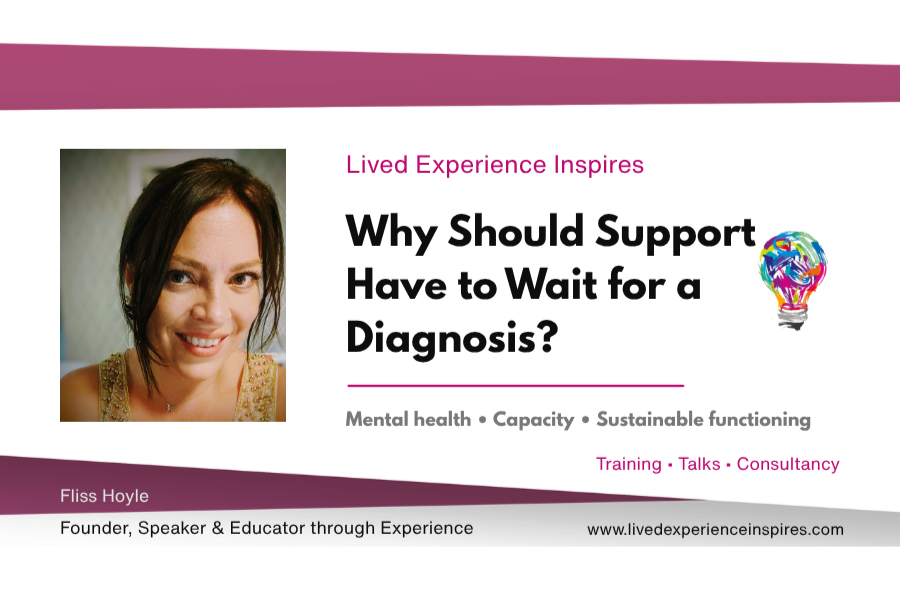
Why Should Support Have to Wait for a Diagnosis?
By Felicity Hoyle, Lived Experience Inspires
A diagnosis can change someone’s life, but what happens to people struggling long before they receive one? A recent government review raises important questions about how we recognise individual needs, provide meaningful support and create environments where people can function and thrive.
A recent independent government review into mental health conditions, ADHD and autism has called for a shift towards a needs-led plus diagnosis approach. It recognises that too many people face lengthy waits for assessment and support, while help that could be provided earlier remains out of reach.
Receiving a diagnosis can be life-changing. It can provide understanding, validation, access to appropriate treatment and a clearer picture of someone’s experiences. But recognising someone’s difficulties and responding to their needs shouldn’t depend entirely on having a diagnostic label.
Consider someone struggling with concentration, sensory overload, anxiety or cognitive fatigue. Whether these difficulties arise from ADHD, a mental health condition, physical illness, significant life pressures or something not yet understood, the impact on daily functioning can be very real.
Too often, people with established diagnoses still struggle to access appropriate support, let alone those who remain undiagnosed. We need to move beyond simply knowing about conditions and start asking what individuals are experiencing, what might help and which barriers we can reasonably remove.
For workplaces, this could mean quieter spaces, flexibility around working patterns, clearer communication, manageable workloads or different ways for employees to contribute. It also means creating an environment where people feel comfortable raising difficulties without fearing judgement or feeling pressured to disclose personal medical information.
My own lived experience has shaped how I approach education. I’ve experienced the importance of diagnosis, but also how individual needs can change depending on health, circumstances and the pressures we’re managing. A diagnosis alone doesn’t tell someone everything about what I need or what I can realistically cope with.
This is one reason I believe practical education should be accessible and inclusive, rather than selectively offered to those already experiencing difficulties or identifying with a particular condition. Through Lived Experience Inspires, I focus on helping people better understand mental health, wellbeing and their own capacity, with practical ways to recognise difficulties earlier, reflect on their individual needs and consider what might help, within the resources and support available to them.
Giving everyone opportunities to learn, reflect and recognise their own needs creates possibilities for earlier action. What works for one person may not work for another. We also have different resources, responsibilities and levels of support available. Education needs to recognise these differences rather than assume everyone can make the same changes.
Workplaces have an important role in recognising individual needs, understanding what is within their influence and considering practical adjustments that can make a meaningful difference.
The review offers an opportunity to rethink how we respond to people’s needs, but its real value will depend on what happens next.
A diagnosis can help us understand why someone is struggling. Listening to their needs helps us understand what we can do about it.
Share this article
Follow us
Latest articles

October 25, 2026
October 25, 2026